


Can PE Pipework be used for sewage systems?
As a supplier of PE pipework, I often encounter inquiries about the suitability of our products for sewage systems. This blog post aims to provide a comprehensive analysis of whether PE pipework can indeed be used for sewage applications, exploring its advantages, limitations, and considerations.
Advantages of Using PE Pipework in Sewage Systems
1. Corrosion Resistance
One of the most significant advantages of PE pipework in sewage systems is its excellent corrosion resistance. Sewage contains a variety of corrosive substances, such as acids, alkalis, and salts, which can gradually damage traditional metal pipes. In contrast, PE pipes are made of high - density polyethylene, a material that is highly resistant to chemical corrosion. This means that PE pipes can maintain their structural integrity over a long period in harsh sewage environments, reducing the need for frequent replacements and maintenance. For example, in areas where the sewage has a high sulfuric acid content due to the decomposition of organic matter, PE pipes will not be affected by the acid corrosion as steel pipes would.
2. Flexibility
PE pipes are flexible, which is a great benefit in sewage system installation. They can easily adapt to ground movements, settlement, and uneven terrains without cracking or breaking. This flexibility allows for easier installation around obstacles and in areas with complex underground conditions. For instance, when laying sewage pipes in an area with a high water table or near existing structures, the flexibility of PE pipes enables them to be bent and shaped as needed, reducing the need for additional fittings and joints. This not only simplifies the installation process but also minimizes the potential for leakage at connection points.
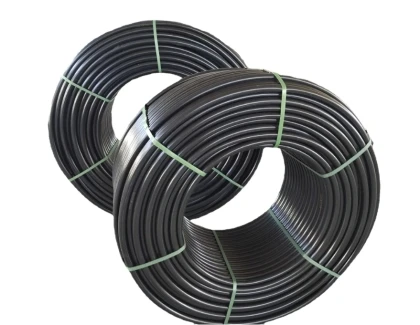

3. Smooth Inner Surface
The inner surface of PE pipes is extremely smooth. This smoothness reduces the friction coefficient, which in turn improves the flow capacity of sewage in the pipes. With less friction, sewage can flow more freely through the pipes, reducing the risk of blockages caused by the accumulation of solids and debris. In comparison to pipes with rough inner surfaces, such as some concrete pipes, PE pipes can transport sewage more efficiently, requiring less energy for pumping in gravity - assisted or force - main sewage systems.
4. Lightweight
PE pipes are relatively lightweight compared to traditional pipe materials like concrete or cast iron. This makes them easier to handle, transport, and install. Lighter pipes mean lower transportation costs and less labor - intensive installation processes. For large - scale sewage projects, the lightweight nature of PE pipes can significantly reduce the overall project cost and construction time. Workers can install PE pipes more quickly and with less heavy - equipment support, leading to faster project completion.
Limitations and Considerations
1. Temperature Sensitivity
PE pipes have a certain degree of temperature sensitivity. In extremely cold temperatures, PE pipes can become brittle, increasing the risk of cracking. On the other hand, in high - temperature environments, the mechanical properties of PE pipes may be affected, and they may deform. When using PE pipes in sewage systems, it is necessary to consider the local climate conditions. In cold regions, proper insulation measures may need to be taken during installation to protect the pipes from freezing temperatures. In hot areas, the pipes should be installed in a way that avoids direct sunlight exposure for extended periods to prevent overheating.
2. UV Resistance
Although PE pipes have good chemical resistance, they are not inherently resistant to ultraviolet (UV) radiation. If the PE pipes are exposed to sunlight for a long time during storage or installation, the UV rays can degrade the surface of the pipes, reducing their mechanical properties. Therefore, when using PE pipes for sewage systems, especially in outdoor or above - ground applications, it is important to use UV - stabilized PE pipes or provide appropriate protection, such as covering the pipes with insulation or a protective layer.
3. Jointing Techniques
Proper jointing of PE pipes is crucial for the performance of sewage systems. While there are reliable jointing methods available for PE pipes, such as fusion welding and mechanical joints, they require skilled labor and proper equipment. Incorrect jointing can lead to leakage, which can cause environmental pollution and damage to the surrounding infrastructure. It is essential to ensure that the installation team is well - trained in the specific jointing techniques required for PE pipes to guarantee the integrity of the sewage system.
Applications of PE Pipework in Sewage Systems
PE pipework is widely used in various sewage applications, including:
1. Sewer Networks
In municipal sewer networks, PE pipes are commonly used for both gravity - flow and pressure - sewer systems. Their corrosion resistance and smooth inner surface make them ideal for transporting raw sewage from residential, commercial, and industrial areas to treatment plants. The flexibility of PE pipes also allows for easy integration into existing sewer systems during expansion or renovation projects.
2. Septic Tank Connections
PE pipes are often used to connect septic tanks to the main sewer lines or for the distribution of treated effluent in septic systems. Their resistance to chemical corrosion ensures long - term performance in the harsh environment of septic tanks, where the sewage undergoes initial treatment processes.
3. Industrial Sewage Disposal
Many industries generate sewage with specific chemical compositions. PE pipes, with their excellent corrosion resistance, can be used to safely transport industrial sewage from the production facilities to treatment and disposal points. For example, in the chemical industry, where the sewage may contain strong acids or alkalis, PE pipes can prevent the corrosion that would occur with other pipe materials.
Conclusion
In conclusion, PE pipework can be an excellent choice for sewage systems. Its advantages in terms of corrosion resistance, flexibility, smooth inner surface, and lightweight make it suitable for a wide range of sewage applications. However, it is important to be aware of its limitations, such as temperature sensitivity, UV resistance, and the need for proper jointing techniques. By taking these factors into consideration and following appropriate installation and maintenance practices, PE pipework can provide a reliable and long - lasting solution for sewage systems.
If you are interested in using PE pipework for your sewage project, we, as a professional PE pipework supplier, can offer high - quality PE Pipe for Water Supply, PE Gas Pipe, and PE Plastic Pipe. Our products are manufactured to meet strict quality standards and come with technical support. We invite you to contact us for further discussions and to explore the best - suited PE pipe solutions for your specific sewage system requirements.
References
- "Plastic Pipes in Civil Engineering: A Manual of Practice" by The British Plastics Federation
- "Handbook of Polyethylene" edited by Andrew Peacock
- Technical literature from leading PE pipe manufacturers.


