


Hey there! As a supplier of PE plastic pipes, I often get asked about the differences between HDPE and LDPE plastic pipes. It's a pretty common question, and it's important to understand these differences if you're in the market for plastic pipes. So, let's dive right in and break it down.
What are HDPE and LDPE?
First off, HDPE stands for High - Density Polyethylene, and LDPE stands for Low - Density Polyethylene. They're both types of polyethylene, which is a widely used plastic. Polyethylene is made from ethylene monomers, but the way these monomers are arranged and bonded gives rise to different types of polyethylene, like HDPE and LDPE.
Physical and Chemical Properties
Density
The most obvious difference between HDPE and LDPE is their density. HDPE has a higher density, usually ranging from 0.941 to 0.965 g/cm³. This higher density is due to its more linear molecular structure. The molecules in HDPE are packed closely together, which gives it a more rigid and stronger structure.
On the other hand, LDPE has a lower density, typically between 0.910 and 0.940 g/cm³. Its molecular structure is more branched, which means the molecules can't pack as tightly. This results in a more flexible and softer material.
Strength and Rigidity
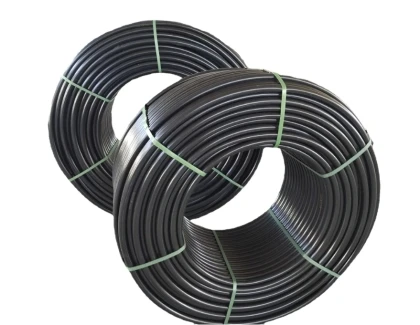
Because of its high - density and linear structure, HDPE pipes are much stronger and more rigid. They can withstand higher pressures without deforming. This makes them ideal for applications where strength is crucial, like PE Pipe for Water Supply. HDPE pipes can handle the high pressures of water distribution systems without bursting or leaking.
LDPE pipes, being more flexible, are not as strong in terms of pressure resistance. However, their flexibility is an advantage in some situations. For example, they can be easily bent and shaped without breaking, which is useful for applications where the pipes need to follow a curved path.

Chemical Resistance
Both HDPE and LDPE have good chemical resistance. They're resistant to many acids, alkalis, and other chemicals. But HDPE generally has better chemical resistance than LDPE. This is because its dense structure makes it more difficult for chemicals to penetrate the material. So, if you're dealing with corrosive substances, HDPE pipes are often the better choice.
Temperature Resistance
HDPE has a higher melting point and better temperature resistance compared to LDPE. HDPE can typically withstand temperatures up to about 120°C (248°F) for short periods and around 80 - 90°C (176 - 194°F) for continuous use. LDPE, on the other hand, has a lower melting point, usually around 105 - 115°C (221 - 239°F). So, in high - temperature applications, HDPE is the go - to option.
Manufacturing Processes
The manufacturing processes for HDPE and LDPE pipes also differ. HDPE pipes are usually made through extrusion. In this process, the HDPE resin is heated until it becomes molten and then forced through a die to form the pipe shape. The high - pressure extrusion process helps to align the molecules in a more linear fashion, which contributes to the pipe's strength.
LDPE pipes can also be made by extrusion, but they may also be produced through blow - molding. Blow - molding is a process where the molten LDPE is placed in a mold, and then air is blown into it to expand it into the shape of the pipe. This process is well - suited for making more flexible and thinner - walled pipes.
Applications
HDPE Pipe Applications
- Water Supply Systems: As mentioned earlier, HDPE pipes are great for PE Pipe for Water Supply. Their strength and chemical resistance make them a reliable choice for transporting clean water over long distances.
- Gas Distribution: HDPE pipes are also commonly used in PE Gas Pipe systems. Their high - pressure resistance and leak - proof joints ensure the safe and efficient distribution of natural gas.
- Sewer and Drainage: In sewer and drainage systems, HDPE pipes can handle the flow of wastewater and sewage. Their smooth interior surface reduces the risk of blockages, and their durability means they can last for a long time underground.
LDPE Pipe Applications
- Agricultural Irrigation: LDPE pipes are often used in agricultural irrigation systems. Their flexibility allows them to be easily laid out in the fields, and they can withstand the relatively low pressures used in these systems.
- Cable Protection: Because of their flexibility and resistance to environmental factors, LDPE pipes are used to protect electrical and communication cables. They can be bent around corners and obstacles to provide a protective sheath for the cables.
- Food and Beverage Industry: LDPE is food - grade safe, so LDPE pipes are used in the food and beverage industry for transferring liquids like milk, juice, and other non - corrosive food products.
Cost Considerations
Generally, HDPE pipes are more expensive than LDPE pipes. This is mainly because of the higher raw material cost and the more energy - intensive manufacturing process. However, the cost difference may be offset by the longer lifespan and better performance of HDPE pipes in certain applications. When choosing between HDPE and LDPE pipes, you need to consider not only the upfront cost but also the long - term cost of maintenance and replacement.
Installation
Installing HDPE and LDPE pipes also has its differences. HDPE pipes are usually joined using heat fusion techniques, such as butt fusion or electrofusion. These methods create a strong, leak - proof joint that is as strong as the pipe itself. The installation process requires specialized equipment and trained personnel, but the result is a very reliable connection.
LDPE pipes can be joined using simpler methods like solvent welding or mechanical couplings. Solvent welding involves using a chemical solvent to soften the plastic and fuse the pipes together. Mechanical couplings are physical connectors that hold the pipes in place. These methods are easier and quicker to perform, but the joints may not be as strong as those of HDPE pipes.
Which One Should You Choose?
Deciding between HDPE and LDPE pipes depends on your specific needs. If you need a pipe that can handle high pressures, has good chemical and temperature resistance, and is suitable for long - term, heavy - duty applications, then HDPE is the way to go. It's a great choice for water supply, gas distribution, and sewer systems.
If you're looking for a more flexible, cost - effective option that's easy to install and suitable for low - pressure applications, LDPE might be the better choice. It's ideal for agricultural irrigation, cable protection, and some food - related applications.
As a PE plastic pipe supplier, I can help you make the right choice for your project. Whether you need HDPE or LDPE pipes, we have a wide range of products to meet your requirements. If you're interested in purchasing our pipes or have any questions about which type is best for you, don't hesitate to reach out. We're here to assist you in finding the perfect solution for your piping needs.
References
- "Handbook of Polyethylene" by Andrew Peacock
- "Plastic Pipe Systems" by Michael W. Pidcoe
- Various industry reports and technical papers on polyethylene pipes.


